
Home / Heating systems / Under-tile heating
Floor heating: cable
Under-tile heating with Safe-t-SCREED cable
Safe-t-SCREED is a heating cable laid in the sand-cement screed beneath new tiles, such as in a bathroom. The screed and tiles spread the warmth across the floor.
Planning bathroom underfloor heating in Perth? CBS supplies the specified cable and controls, with technical guidance for your electrician. Products are also available for Sydney and Melbourne projects. If a separate screed will not fit, compare ultra-thin floor heating cable.
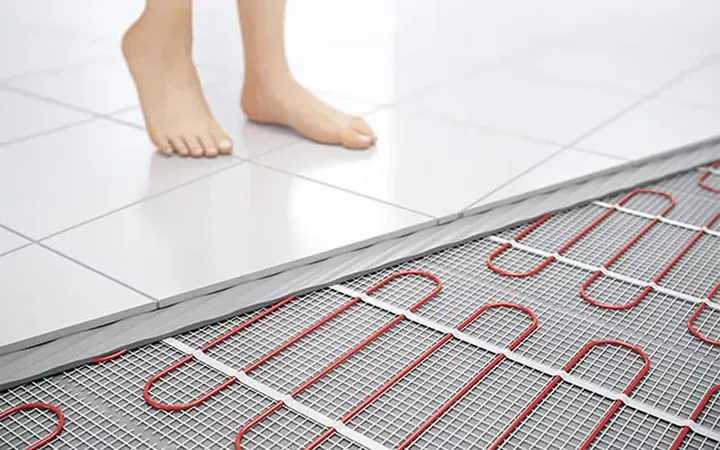
- In the screedbeneath new tiles
- Specified cableselected for each area
- Controlsspecified to suit your rooms and project
How it works
How under-tile cable heats a floor
The cable warms the screed, and the screed and tiles spread that warmth evenly across the floor surface.
- Tiles, the finished floor.
- Tile adhesive.
- Sand-cement screed containing the Safe-t-SCREED cable, fixed in place as specified.
- Concrete subfloor.
Explanatory illustration of the general construction, not installation instructions. Ron provides the installation requirements for each project with the quote.
Suitability
Is under-tile cable right for your floor?
Well suited to
- Bathrooms and other newly tiled areas
- Floors where a sand-cement screed is laid before tiling
- Kitchens and living areas with tile or stone
- Larger tiled areas, with cables specified for the area
Things to consider
- The screed is laid as part of the floor build-up, so it suits new tiling
- Where floor height must stay low, see ultra-thin cable
- Other floor finishes only where Ron confirms they suit
- A licensed electrician connects the system
What Ron will ask about
- Your suburb or postcode
- The rooms and heated floor areas
- The floor finish and screed details
- New build or renovation, and timing
- Plans or a tile layout, if you have them
Bathrooms
Bathroom underfloor heating
Bathrooms are a common use for under-tile cable. Whether it suits yours depends on the floor build-up, the heated area and the room layout, which Ron confirms for your project.
- Planned with new tiling. The cable is laid in the sand-cement screed before the tiles go down, so it is planned alongside the tiling work.
- Cable in the screed. Safe-t-SCREED sits within the screed, and the screed and tiles spread the warmth across the bathroom floor.
- Renovations with limited height. If a screed would raise the floor too much, ultra-thin Safe-t-WIRE cable is designed for low build-ups without a separate screed.
- Specified for the room. Ron specifies the cable, heated area and controls in the quote. Connection to power is work for a licensed electrician.
CBS supplies under-tile heating cable for projects in Perth and South West WA, Sydney and Melbourne, with technical guidance for the electrician. Installation arrangements are confirmed for each project. Request a bathroom underfloor heating quote with your room sizes, floor build-up and postcode.
Technical details
Safe-t-SCREED cable
General product information. Selection details for your project are specified in your quote.
| Heating element | Safe-t-SCREED heating cable for laying in a screed |
|---|---|
| Position | Within the sand-cement screed, beneath the tiles |
| Cable selection | Cable length, output and coverage are specified for each area |
| Floor finishes | Tiled floors; other finishes only where Ron confirms they suit |
| Controls | Controls are specified to suit your rooms and project. |
How a project runs
From assessment to installation
-
Step 1: Assessment
Tell Ron about the rooms, the floor build-up and your timing.
-
Step 2: Specified quote
Cable selection, layout and controls for each area.
-
Step 3: Supply
CBS supplies the specified cable and controls for your project.
-
Step 4: Installation guidance
A licensed electrician installs and connects the system with Ron's technical guidance. Installation arrangements are discussed case by case.
Ask Ron about under-tile heating.
Tell Ron your postcode, room sizes and whether this is new tiling or a renovation. If you are unsure about the screed or floor height, explain what is planned and ask which details he needs for a specified quote.