How it works
An electric heating element sits within the floor build-up. When it is switched on, it warms the floor, and the warm floor gives off radiant heat to the people and furnishings in the room.
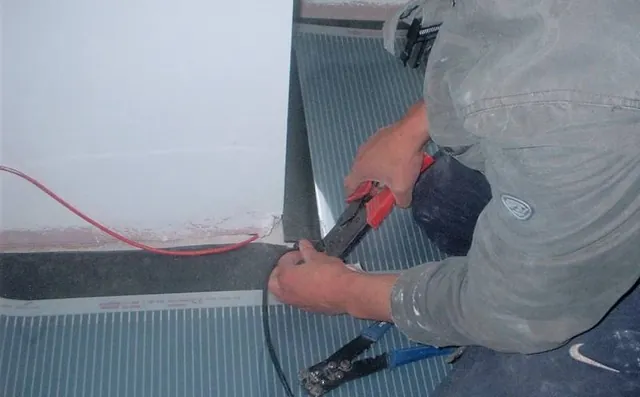
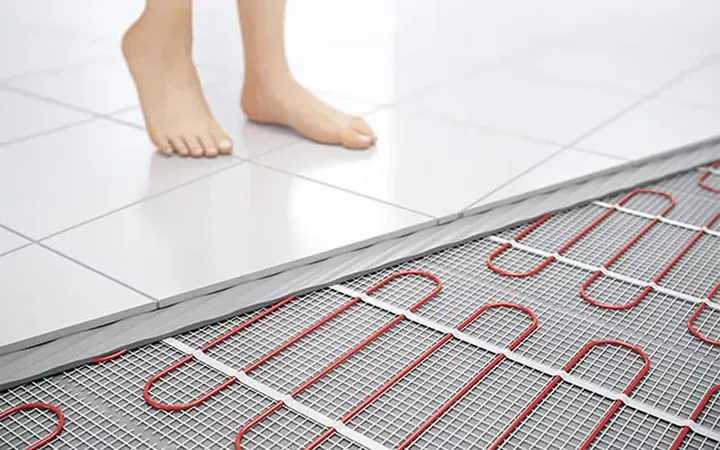
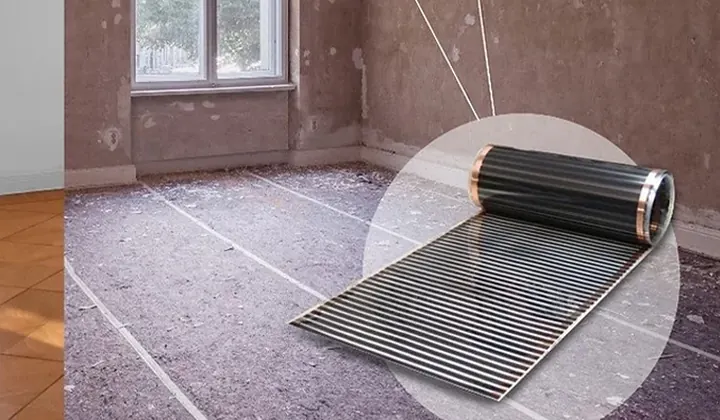
The element is either a thin carbon film or a heating cable. Which one suits depends on the floor finish and how the floor is built. Controls are specified to suit the rooms and the project.
CBS works with electric heating only. It does not supply or install hydronic (water-based) heating, pipes or boilers.
Carbon film or heating cable?
The floor finish is usually the deciding factor:
| Floor | System usually considered |
|---|---|
| Floating timber or laminate | Carbon film, laid dry within the floor build-up |
| Suitable carpet | Carbon film, where the carpet and underlay suit a heated floor |
| New tiles on a screed | Under-tile heating cable in the screed |
| Tiles where height is limited | Ultra-thin floor cable, where the floor finish suits it |
| New concrete slab | In-slab heating cable, fixed before the pour |
Ron confirms the right system for your floor covering, underlay and subfloor before anything is ordered.
Is it safe?
Electric floor heating products are designed to be installed within a floor. Safety depends on the right product being specified for the floor, installed to the specification and connected by a licensed electrician, who also confirms the electrical requirements for your home.
CBS sets out those requirements in the quote, so your electrician has them before work starts.
What affects running costs?
There is no single running-cost figure for floor heating. It depends on:
- the size of the heated area and the output specified for it
- how well the room and floor are insulated
- your electricity tariff
- how the system is controlled and used
Ron can explain the specified output for your rooms in the quote.
Before you start
A few details make the first conversation with Ron much quicker:
- the rooms you want to heat and their approximate sizes
- the floor finish you plan to use, and its maker if known
- the subfloor: concrete, timber or existing tiles
- whether it is a new build, an extension or a renovation, and your timing
- where fixed cabinetry will go, as heating is not placed under it